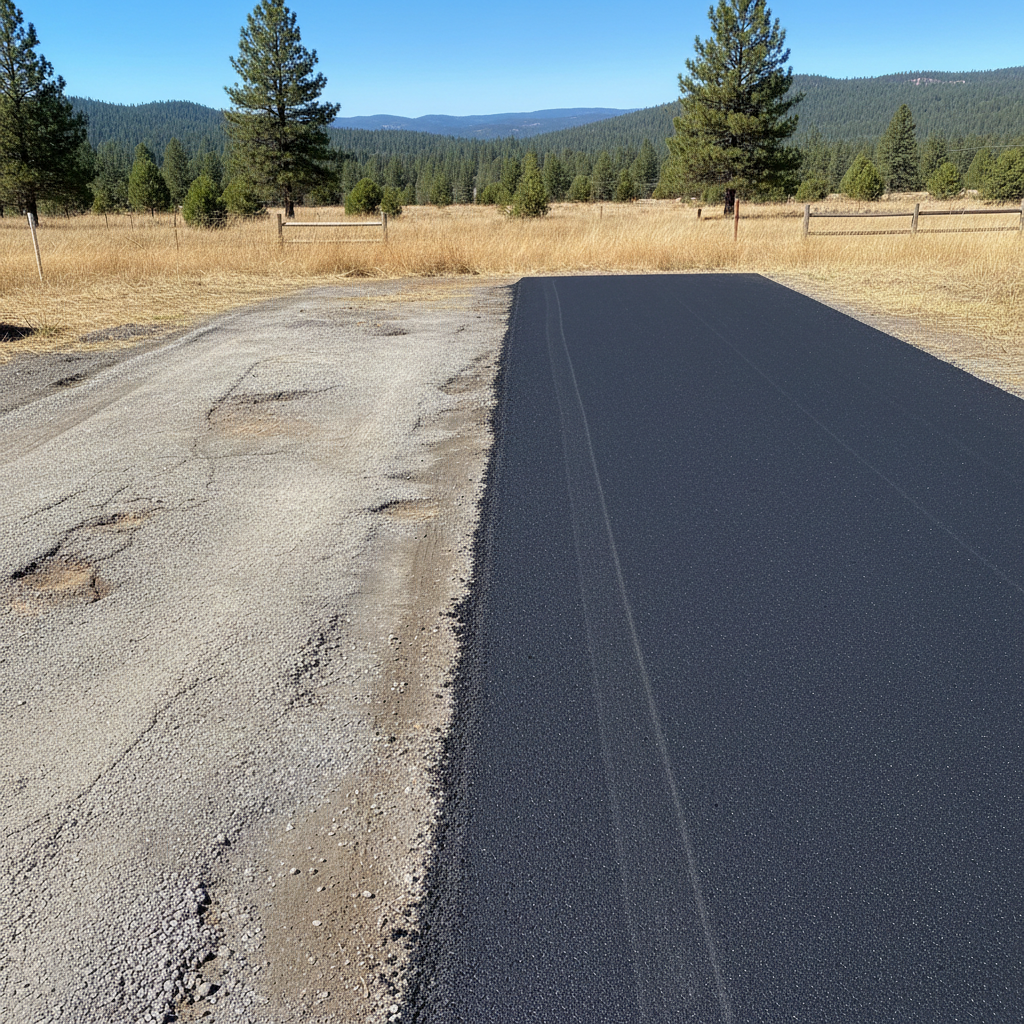
Alright, let's talk driveways. If you own a home in Burney, you've probably given some thought to what kind of surface you want for your parking area or, you know, your actual driveway. The two big options I see folks weighing up are asphalt and good old gravel. Both have their place, but they're definitely not created equal, especially when you consider our specific climate and soil conditions around here.
The Real Deal with Gravel Driveways
Gravel's often the first thing people think of when they want something affordable and quick. And yeah, it usually *is* cheaper upfront, no doubt about it. You can get a load of aggregate delivered, spread it out, and boom, you've got a surface. It's pretty permeable too, which means rainwater soaks right through. That's a definite plus for drainage, especially in areas with clay soil like we sometimes see closer to the Pit River, where water can just sit.
But here's the catch with gravel: maintenance. It's a never-ending story. You'll be raking it back into place constantly, particularly after heavy rains or if you've got a lot of traffic. Potholes? Oh yeah, they're coming. Weeds? They absolutely love gravel. You'll be fighting them off all the time. And let's not forget the dust in the dry summer months – your car and everything around your house will be covered. In winter, snow plowing can be a real pain, as you often end up scraping half your gravel away with the snow. What a mess.
Appearance-wise, it can look rustic, which some people like. But it rarely looks 'finished' or 'polished.' It's more functional than aesthetic, usually.
Digging into Asphalt Paving
Now, asphalt. When I talk to folks about asphalt, the first thing that often comes up is the initial cost. Yes, it's more expensive upfront than just dumping a load of gravel. There's more prep work involved – proper grading, a good base layer, and then the hot asphalt application. It's a skilled job, and it takes specialized equipment, which is why a company like Coastal Asphalt Paving invests in the right gear and people, incidentally.
But here's where asphalt really shines: durability and maintenance. Once we install it properly, an asphalt driveway can last 15-20 years, sometimes more, with minimal upkeep. You're looking at occasional crack sealing and maybe a sealcoat every few years to protect it from the sun and elements. That's a lot less work than constantly battling gravel. No more raking, no more dust clouds, and snow plowing? It's a breeze.
From an aesthetic standpoint, asphalt gives you a clean, smooth, dark surface that really boosts your home's curb appeal. It looks professional and finished. It also provides a much more stable surface for walking, biking, or playing basketball, which is something you just don't get with loose gravel.
Which Way Should You Go in Burney?
Considering our conditions here in Burney – hot, dry summers that kick up dust, and winters with snow and rain that can wash away gravel or create muddy messes – I lean heavily towards asphalt for most homeowners. The long-term savings in maintenance and the sheer convenience usually outweigh that higher initial cost, in my experience.
Think about it: how much is your time worth? How much is it worth not having to deal with dust, potholes, and gravel scattered across your lawn? How much is it worth having a smooth, safe surface for your family?
For a short, seldom-used access road or a very rustic property where aesthetics aren't a concern, gravel might make sense. But for your main driveway, the one you use every day, the one that impacts your home's appearance and your daily life, asphalt is almost always the better investment in the long run. It holds up to our weather, it's easier to maintain, and it adds real value to your property.
I've seen too many homeowners regret going with gravel only to call me a few years later, fed up with the constant work, asking for an asphalt quote. Save yourself the headache and do it right the first time. Give us a call, and we can talk through your specific needs and get you a solid asphalt solution that'll last.